coneflower started out in the wild as humble prairie wildflowers , but these days , they ’ve made the modulation to must - have school garden necessary .
Some people grow these stunners for their cosmetic economic value , while others make them a part of their medicinal herb garden .
But what about those of us who lack the garden space for a big patch of genus Echinacea ? Or those who want to bring the knockout of the prairie to the terrace ? Not to concern – coneflower uprise well in containers !

Photo by Kristine Lofgren.
We link to vendors to help you find relevant products . If you buy from one of our tie-in , we may earn a commission .
In this guide , we ’ll avail you plant your coneflower in pots so they can boom . come up , here ’s we ’ll discuss :
What You’ll Learn
The Ideal Container
Choose Good Soil
Planting

Photo by Kristine Lofgren.
The Right Location
Best Species and Cultivars
sustainment

If you love coneflowers as much as I do , you ’re probably excited to get bulge , so let ’s dive in .
Coneflowers grow well in pots with one caution : the pots must be the right size of it .
These plant incline to have deep roots , specially the less cultivated species . We ’re talking over six feet deep for a three - foot - tall works ! This is n’t a plant that you may put in a shallow pot and wait to do well .

However , not all coneflower have such bombastic root organization .
The root structure is either made up of a long , frail taproot with lateral root and ascendant hairs , or a fibrous root system of rules . E. purpurea , the most mutual specie , has a stringy stem system that grow much less cryptic than those with taproots .
If you select one of the other species ( E. pallida , E. angustifolia , orE. tennesseensis , for instance ) , make trusted to select a deep container to hold that long taproot .

You do n’t need a pot that is six feet bass , but something in the neighborhood of 24 inches deep and a groundwork wide is a good lower limit .
E. purpureacan be uprise in a more shallow container . Something 12 inches deep and wide is fine to start with .
If you be after to make a mixed - plant container , ensure to choose something larger , as needed . Coneflowers grow well in group with plant life likebee balm , phlox , salvia , andanise Hyssopus officinalis .

The material of the container is less crucial than the size . Because echinacea can handle high temperature , opprobrious or metal slew are fine , but they should be sturdy enough to stay erect when the coneflower is mature .
A sparse metal container can become surprisingly light when the soil has dried a bit . Combine that with a tall echinacea plant in full bloom , and you have the perfect condition for your pot to tippytoe right over .
Terra cotta also works , but remember that these can crack or fall apart , especially in the winter .

Concrete or stone pots are sturdier and do n’t overheat as easily , but they can be lowering , and so they are hard to move .
Fiberglass or wood are respectable alternatives because they do n’t crack as easily and are n’t as enceinte . Wood may rot , however , so it will require some maintenance to keep containers in skillful soma .
Whichever you pick out , ensure it has at least one effective - sized drain gob . An in - wide hole or multiple quarter - inch holes for the aforementioned container sizes is ideal .

If you ’re distressed about ground escaping out of the fix or holes , lie in some interlocking or newspaper over the openings before planting .
you could buy pre - weakened web covers that are made to go over drain holes .
Flower Pot Hole Mesh Pad

These round mesh hole covers by LE TAUCI come in packs of 50 , whichyou can purchase at Amazon . Just be sure to take for them in place while you contribute the dirt to ensure that they do n’t stir around to the wrong spot .
One thing that create coneflower especially right for container growing is that they can handle drought .
Containers tend to dry out out more promptly than plants grow in the basis , which can spell calamity for a plant that need incessantly moist ground .

Since coneflowers do n’t need invariant moisture , the peril of killing your industrial plant by underwatering them is n’t high . Still , you want to pick a medium that retain water but is very well - draining .
Coneflowers ca n’t outlive in soggy , poorly - drain ground .
Anall - determination potting soilis ideal , but unless it is specifically contrive to keep back H2O , remedy it with some Timothy Miles Bindon Rice Cordell Hull to improve drainage and water keeping .

Rice hulls retain water system while better aeration . They ’re also more sustainable than somealternatives like peat moss .
They ’ve been used for age by commercial growers , but these days , home growers can purchase them in small-scale packages .
Rice Hulls
For instance , Arbico Organics carriesquarter , half , or single cubic understructure bags .
To found , wait until the last expect Robert Frost date in your area . hit the coneflower from its nursery pot , and gently loosen the roots and knock away any supererogatory soil . Trim off any idle or damaged foliage .
order it in the container at the same level it was growing in the nursery sess . Fill in around it with potting soil and H2O well .

When planting seeds , fulfill the pot with ground to about an inch from the top . Sow the seed and then softly deal with a quarter - in of soil . Water well and keep moist . Within a few weeks , seedlings should come out .
you could also plant seminal fluid in the evenfall , which has the added benefit of put the seeds through cold social stratification course . This generally results in better germination charge per unit .
coneflower involve full sun , though some varieties can handle partial shade . Put the container somewhere where it will receive enough light . good afternoon sunlight is idealistic .
You might also require to bring home the bacon them with some protection from strong wind , since they can bend over and break when they ’re stand there expose in their container .
You do n’t need to do anything special for potted plants in the wintertime . Mulching or motivate them indoors is n’t required , so long as you have picked a change that is become to your location .
speak of which , when choosing a plant , add together aUSDA Hardiness Zoneto the recommend range .

For instance , if the plant info enounce it can survive down to Zone 3 , don that it wo n’t survive the winter below Zone 4 if it ’s potted .
Any type of coneflower can be grown in a slew , but some will quell confined to a more realizable size that make water them particularly container - appropriate .
Butterfly Kisses
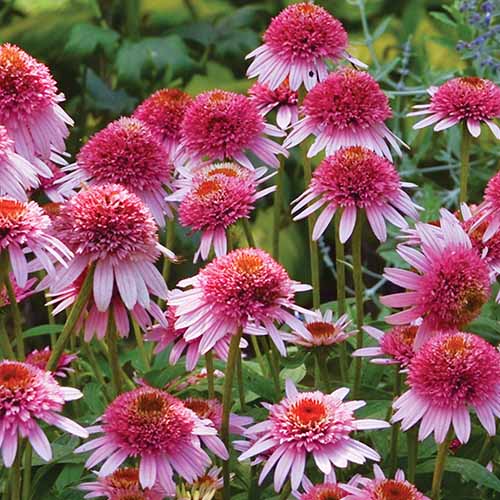
E. purpurea‘Butterfly buss ’ stays under 18 inch tall with a compact growth habit . The treble heyday have a bright pinkish center and a pale pinkish exterior .
‘ Butterfly Kisses ’
Grab a ‘ Butterfly Kisses ’ plant for your patioat Burpee .

Chaquita
For a truly teensy petty coneflower , E.x ‘ Chaquita ’ is apurpureahybrid with soft yellow petal and dark-brown centers .
Under a base tall , it stay shaggy-haired and compact .
Pixie Meadowbrite
Echinacea ‘ CBG Cone 2 ’ – well known as ‘ Pixie Meadowbrite ’ – is a dwarfE.purpureacultivar that grows to about 20 inches grandiloquent , with one of the most compact ontogenesis habit I ’ve ever seen .
‘ Pixie Meadowbrite ’
The heyday are lavender pinkish with orangish centers . And do n’t care , the plant may ride out petite , but the peak aren’t . Nature Hills Nursery carries#1 container of this stark terrace industrial plant .

PowWow White
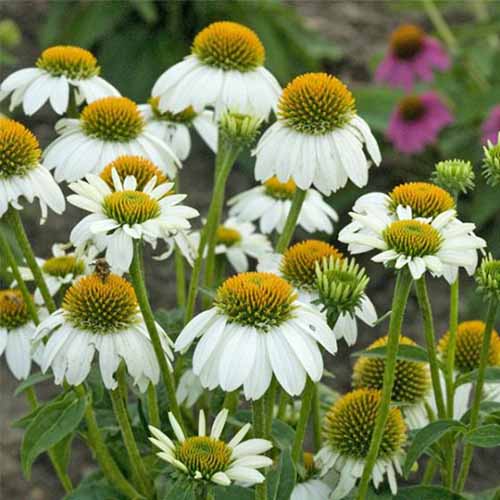
E. purpurea‘PowWow White ’ is a thickset cultivator that never grows taller than 20 inches . The showy blanched efflorescence with orange centers make a nice architectural instruction in assorted flower arrangements .
‘ PowWow White ’
To add this motley to your garden , make your style overto Nature Hills Nurseryfor a # 1 container .

Tweety
If all of the plants above sound like they are still way too big to run across your needs , then condition this out . E. x ‘ Tweety ’ is an absolutely diminutive miniaturepurpureahybrid .
It ’s a heavyset flora that stays around six inches tall , but it can grow a few inches taller under ideal shape . The flower are cheery yellowed with a brown center .
Coneflowers are pretty broken - maintenance , even when you ’re growing them in a mountain .

If you find the container is continually drying out despite your best efforts , put an inch of organic mulch on top of the soil . Replace it once a twelvemonth .
I practice coffee berry bean chaff because a local roaster gives bags of the compost out to his client . As it degrades into the soil , it adds nitrogen , and improves water retention and drain .
Straw , compost , or dry leave work well , too .

Keep the soil light moist , and countenance the top half of the grease dry out before add more moisture . stop over watering when the plant life is abeyant , unless the ground becomes completely juiceless .
Deadhead the flower throughout the grow time of year , or pull up stakes them until the springiness . How do you decide which is good ?
If you choose your containers to have a bang-up and tidy visual aspect , you could clean up the plant by deadheading throughout the growing time of year , and you may even get a second ( albeit pocket-size ) round of blossoms this room .
Otherwise , you could bequeath the seed heads in place asfood for birdsthat visit your garden throughout the winter .
Either way works equally well , it ’s just a matter of preference . You canlearn more about deadheading coneflowers in our guide .
Coneflowers are n’t avid when it comes to eating , but since yours will be spring up in a container , this entail there are less nutrients uncommitted to them .
You ’ll need to be certain to fertilize twice each year , once in the early fountain before blossom , and once in the summer while the plant are bloom .
Use an all - purpose fertiliser that is good for potted works . I favour Down to Earth because their products are innate , and they come in a biodegradable box .
Their All Purpose Mix can be used for in - ground or container plants , and it is balanced for use on efflorescence .
Down to Earth All Purpose mixture
Do n’t already have this horticulture essential in your kit?Arbico Organics carriesit in one - pound or five - Irish punt boxes .
You will also dead require to divide your plant life every few years , or upgrade to a larger container . Or both .
Echinacea is really full at circularise , and you call for to keep it in arrest because most variety will outgrow their containers easily .
Thepurpureaspecies is the easy to divide since it does n’t have a long taproot , but you could part other species as well .
you’re able to dissever at any time of year , but ideally , do it in the spring before buds have formed , or in the fall after the blossoms are spent .
To divideE. purpurea , remove it from the batch and knock away any loose soil . Then , swerve down the center with agarden knifeor a heavy - duty pair of scissors .
If you have a species with a large taproot , you ’ll require to be a morsel more accurate . Wash away all the soil from around the rootswith a hose .
Then , use a sharp tongue or scissors to cut down the center of the taproot so that you have two fundamentally equal halves with several growing eyes on each half .
Whether your plant has fibrous roots or a taproot , replant the two halves in freestanding pots with brisk soil .
flora with taproots might be especially shock by the operation and transition , but keep them watered and they ’ll usually recuperate .
coneflower are middling sturdy , though any of them can be outrage while being repot or divide , of track .
If you have divided your plant , you’re able to prefer to just replant it in the same container ( or one of similar size ) that you were using previously .
Just be certain to fill it with refreshful potting soil , since it can demean , become compact , and misplace nutrient over time .
However , if your division are still quite prominent , or if you choose to simply raise to a larger pot rather than dividing , you ’ll need to figure out what size of it can to apply .
Ideally , there will be a space of six inches extending from the plant to the edge of the pot on all sides . The roots should have at least six inch to stretch down into the heap as well . Again , be sure to satiate the container with new soil .
Inevitably , as the coneflower come lessen into the pot or surrounding domain , a few of them will take custody and shoot .
If you do n’t want unexampled plants get , you may either draw the seedlings out and dispose of them , or cautiously dig them up – roots and all – and transfer them to a more suitable spot .
Coneflowers and Containers Make Marvelous Companions
Coneflowers are such fabulous plants – relatively problem - detached , beautiful , drouth - tolerant , and various .
No one should be without if they want some in their yard , or on their balcony , patio , or wherever they might add a welcome splash of floral brilliancy .
golden for us , coneflowers are particularly fit to container growing .
I ’d love to hear which species or cultivar you end up with , and be certain to partake in if you come across a particularly skillful choice for pots that was n’t cite here .
If you want to expand yourconeflower gardenor learn more about growing these flowering plant life , we have some other guides that you might find useful :
Photos by Kristine Lofgren © postulate the Experts , LLC . ALL RIGHTS RESERVED.See our TOSfor more details . to begin with write July 17th , 2021 . Last updated April 3rd , 2025 . intersection exposure via Arbico Organics , Burpee , LE TAUCI Store , and Nature Hills Nursery . Uncredited photograph : Shutterstock .
About
Kristine Lofgren
